

Views: 0 Author: Site Editor Publish Time: 2025-06-30 Origin: Site
Sliding doors are sleek, space-saving, and allow for expansive views and easy access—whether on a patio, balcony, interior room, or commercial storefront. But while they bring aesthetic appeal and function, their security is often overlooked. That's where a well-installed sliding door lock becomes essential. Whether you're securing a home, office, or commercial space, understanding how to properly install a sliding door lock is critical for safety, peace of mind, and smart access control.
In this definitive guide, we'll walk you through how to install a sliding door lock step by step. We'll also explore different types of sliding locks, compare options for home use and commercial use, and provide solutions for common issues like sliding glass door lock replacement or automatic door lock repair.
We'll also introduce high-quality locking hardware from WUXI GMB International Corporation—a trusted name in global door hardware manufacturing. Let's get started.
Sliding doors are often the weakest point in a home or building's security, especially when they're installed on balconies or back entrances. Here are some key reasons to install a quality sliding door lock:
Prevent unauthorized entry
Secure children or pets inside
Maintain privacy in bedrooms or bathrooms
Comply with commercial access control requirements
Upgrade outdated or broken door lock components
Integrate with smart home systems via automatic or electric locks
Whether you're working with glass patio doors, French sliding doors, or interior folding doors, the right lock will enhance both security and usability.
Before installation, it's important to know the different types of sliding door locks available. Each lock caters to specific needs based on door material, security level, and frequency of use.
| Lock Type | Best For | Key Features | Installation Difficulty |
|---|---|---|---|
| Basic Latch Lock | Home patios | Simple, easy to install | Easy |
| Sliding Door Lock with Key | Bedrooms, apartments | Key-operated, added security | Medium |
| Magnetic Door Lock | Commercial use | Electromagnetic control | Advanced |
| Combination Door Lock | Shared spaces | No key required, uses code | Medium |
| Mortise Lock | Luxury or commercial doors | Built into lockbody | Advanced |
| Electric Door Lock Motor | Smart homes, offices | Remote or sensor operated | Advanced |
| Folding Door Lock | Closet doors, partitions | Compact and manual | Easy |
| French Door Lock | Double sliding doors | Multi-point locking | Medium |
| Glass Door Lock | Frameless glass doors | Clamp or adhesive based | Medium |
| Automatic Door Lock | High-traffic areas | Auto-closing and locking | Advanced |
Choosing the right lock will determine the tools, time, and installation method needed.
Here's what you'll typically need for a standard sliding door lock installation:
Sliding door lock set (ensure compatibility with your door type)
Screwdrivers (Phillips and flathead)
Power drill
Measuring tape
Pencil or marker
Chisel (for mortise lock installation)
Level
Safety goggles
For more advanced locks like an electric door lock motor or magnetic door lock, additional wiring tools and possibly a multimeter will be required.
GMB offers a full range of sliding door lock solutions, including lockbody, handles, and lock machines for both home and commercial use.
Now let's walk through the general process of installing a sliding door lock. While the exact steps may vary based on the lock type, this process will work for most mechanical locks including keyed and latch-style locks.
Start by selecting a lock that matches your door type and security needs:
For glass doors, consider a sliding glass door lock with key.
For interior use (like a bedroom door lock), a simple latch or push-button model suffices.
For commercial use, go for a mortise or magnetic door lock for higher security.
GMB's product catalog includes options for every door type (see: door lock for sliding door, magnetic, double door lock, etc.).
Close your sliding door and mark where you want the lock to be positioned. Ideally, it should be at a height that's easily accessible but not too low for children to tamper with.
Use a pencil and level to mark screw holes and lockbody outlines.
Use a power drill to drill small pilot holes into the frame or door panel where the screws will go. If working with glass or aluminum, use a specialized drill bit.
Be cautious not to drill too deep, especially if installing a glass door lock.
Align the lockbody with your marked holes and screw it into place. Make sure it's level and flush with the surface.
If installing a mortise lock or lock machine, you may need to chisel a recess into the door frame. GMB's mortise locks come with precision templates to simplify this.
Next, align the strike plate on the opposite frame where the lock will catch. Drill holes and attach it securely.
Ensure the lock and strike plate align perfectly. Misalignment is a common cause of lock failure.
Test the lock by sliding the door open and closed while locking and unlocking. Ensure smooth operation of all components.
If using a sliding door lock with key or combination door lock, test the key or code input.
Tighten any loose screws and make sure the locking mechanism doesn't wobble. Apply lubricant if needed to ensure smooth sliding.
For automatic or magnetic locks, test power connections and ensure the electric door lock motor engages properly.
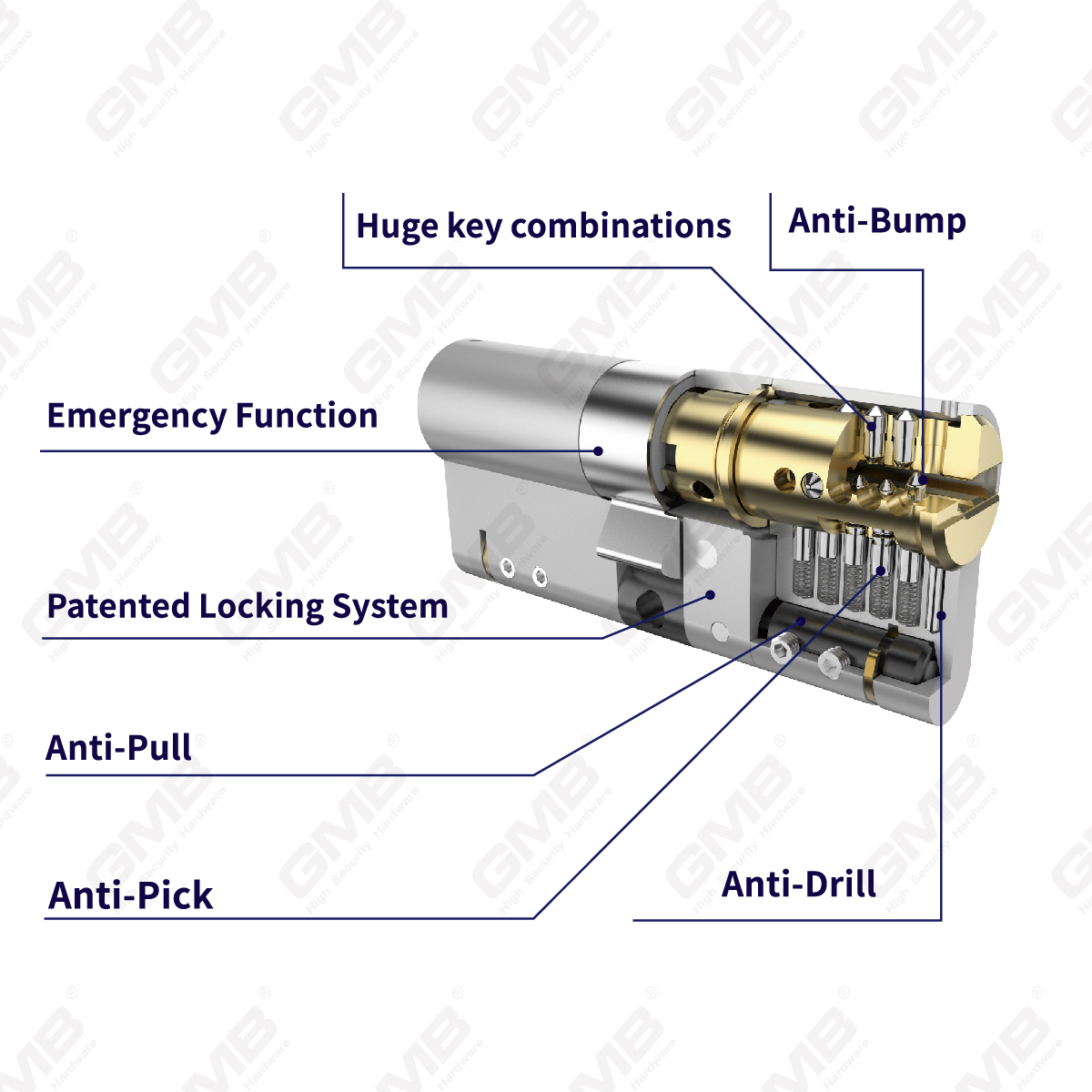
Each type of sliding door comes with its own challenges. Here's how to handle them:
Use adhesive or clamp-style glass door locks
Avoid drilling into the glass unless the lock is designed for it
Opt for keyed models for exterior security
Use a double door lock that secures both panels
Consider multi-point locks for added stability
Use compact folding door locks that don't interfere with panels
Surface bolt locks are easy to install and offer good security
Choose specialized glass door locks with rubberized clamps
Avoid mortise or embedded locks unless frame is added
Sometimes your existing lock is too old or broken to function properly. Here's how to handle a sliding glass door lock replacement:
Remove the old lock using a screwdriver
Clean out the area and check for alignment
Install the new lock using the existing holes or drill new ones
Test the new lock thoroughly
GMB manufactures replacement sliding door locks designed to match standard hole patterns, making replacements easier.
Smart locks are no longer just for front doors. Sliding doors can now be secured using:
Automatic door locks: Great for high-traffic areas (e.g., office sliding doors)
Magnetic door locks: Ideal for commercial use and controlled access
Electric door lock motors: Can be paired with remote controls or fingerprint access
These locks are more complex to install and may require professional help or a door lock installation kit.
| Problem | Cause | Solution |
|---|---|---|
| Lock doesn't align | Strike plate off-center | Reposition strike plate |
| Door won't lock | Obstruction in track | Clean track and realign |
| Lock feels loose | Incorrect screw size | Use longer or thicker screws |
| Lock doesn't engage | Misaligned lockbody | Adjust position |
| Electric lock not working | Power issue | Check wiring and voltage |
| Feature | Home Use | Commercial Use |
|---|---|---|
| Security Level | Moderate | High |
| Lock Type | Latch, keyed, combo | Magnetic, mortise, electric |
| Installation | DIY-friendly | May need professional |
| Durability | Standard | Heavy-duty |
| GMB Options | Bedroom door lock, sliding lock with key | Commercial door lock, magnetic door lock |
For home use, simpler locks like a bedroom door lock with key or a combination door lock suffice. For commercial use, opt for electric sliding locks, magnetic systems, or lock machines from GMB's catalog.
WUXI GMB International Corporation offers a complete line of sliding door lock products that meet international standards. Here are some top picks:
| Product | Best For | Key Features |
|---|---|---|
| Stainless Steel Sliding Lock | Home patios | Easy to install, weather-resistant |
| Magnetic Sliding Lock | Commercial doors | Electromagnetic, high security |
| Mortise Lock with Key | French doors | Embedded, stylish, secure |
| Electric Lock Motor | Smart homes | Remote control, app integration |
| Folding Door Lock | Closets, partitions | Compact, easy DIY install |
| Double Door Lock Set | French sliders | Secure both panels together |
All products are designed for durability, ease of installation, and long-term performance. GMB also provides a door lock installation kit to simplify the process for DIY users.
Q1: Can you install a lock on a sliding door?
A1: Yes. Sliding doors can be fitted with various lock types including latch locks, keyed locks, magnetic locks, and smart electric systems.
Q2: How do you pop a sliding door lock?
A2: "Popping" a lock is not recommended as it may damage the door. Instead, use the correct key or code. If you're locked out, contact a locksmith.
Q3: How do you make a sliding door lockable?
A3: Install a sliding door lock by marking the lock position, drilling pilot holes, attaching the lockbody, and aligning the strike plate. Test for smooth operation.
Q4: How to install a sliding door step by step?
A4: Choose a compatible lock, mark the installation points, drill holes, attach the lockbody, fix the strike plate, and test the lock.
Q5: What's the best lock for sliding glass doors?
A5: A keyed sliding glass door lock or a magnetic lock is ideal. Choose based on security level and whether it's for home or commercial use.
Q6: Can I replace an old sliding door lock myself?
A6: Yes. Most sliding door locks can be replaced using basic tools. Match the new lock with the existing holes or use a template.
Q7: Do I need a special lock for glass or French sliding doors?
A7: Yes. Glass doors require adhesive or clamp locks, while French doors benefit from double door locks or mortise styles.
Installing a sliding door lock is one of the most effective ways to enhance safety, privacy, and access control in both residential and commercial settings. Whether you're upgrading a patio door, securing an office partition, or retrofitting a commercial storefront, the right lock makes all the difference.
From basic latch locks to advanced electric systems, there's a solution for every door type and security need. Be sure to choose the appropriate lock based on your door material, usage environment, and desired level of security.
If you're looking for high-quality, reliable sliding door lock solutions, WUXI GMB International Corporation offers a full range of products—including mortise locks, magnetic door locks, sliding glass door lock replacements, and electric lock motors—to suit every installation scenario.
Explore GMB's product list today and take the first step toward smarter, safer sliding door security.
Tel: +86-510-8271 7656
Fax: +86-510-8271 7655
Email: info@gmbsino.com
Address: 4FL, No.503-1 Nanhu Road,
Sensing Device Industrial Park,
Liangxi District,Wuxi, Jiangsu,
China 214024